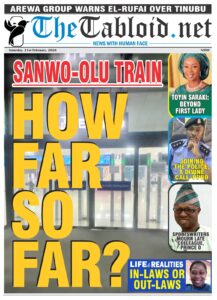
 On an inspection tour alongside members of the state executive council few months after his inauguration as Lagos State Governor, Mr. Babajide Sanwo-Olu made a promise that the Lagos Blue Rail line would take off operations in 2021, giving an appreciable update on the phase of construction.
Sanwo-olu said the mass transportation initiative had recorded a huge progress in the successful completion of an elevated sea-crossing tracks.
His wish, however, summersaulted; the train service could not commence until December 2022 when he formally inaugurated it for public use amidst cheers of even doubting Thomases who had, at the inception of the infrastructure, dismissed it as another white elephant project designed to line pockets of people in power.
Now, the Sanwo-Olu train, as it is called, has continued to fulfil its key purpose, putting smiles on faces of commuters by reducing travel time and easing road congestion.
The service is a reliable option based on a journey from Marina Station to Mile2 Station, which kicked off at 6:33am.
The train stations are equipped with modern facilities and security personnel who conducted routine passenger checks.
During our correspondent’s recent visit, he reported that while the process was orderly, afterwards, it, however, caused delays during peak hours due to an upsurge of commuters.
Directional signs within stations are described as clear and helpful, especially for first-time users. However, long queues were observed at ticketing points. Ticket purchases were mostly done manually. This resulted to extended waiting times during rush hours.
At Marina Station, the number of commuters was not high, but many were observed waiting patiently for the train until it arrived.
Boarding was supervised by railway officials and was generally conducted in an orderly manner, though crowd control became difficult when passenger numbers increased and the train was already on standby.
Public address announcements were made to guide passengers, but these were concurrently drowned out by noise during peak periods.
Onboard the trains, everything looked clean, modern and well cared for. The air-conditioning systems worked well, providing a comfortable environment. Seats were ample during off-peak hours, giving commuters a comfortable and stress-free ride.
Interviews made with two commuters revealed diverse reactions to the service. Many people discussed and shared their views on the train as they confirmed it as a faster and more reliable alternative to road transport in a city known for heavy traffic congestion, and also describing it as less stressful and more predictable than buses or private vehicles.
“I can’t believe this train is operating while I am still alive. I could not see it happening when they started about 10 years ago or so. It is giving me hope that Nigeria would get it right one day and make life easy for a common man. At least, this is an example.
I have made it my only option to go to Lagos Island. It is a good experience, and I commend Governor Sanwo-Olu for giving us this train service,” one Mr Kehinde Adu said.
However, some commuters expressed concern over cramped conditions and limited route coverage. They also raised issues with irregular train schedules during peak periods. Some noted occasional delays caused by technical or operational problems. Then, others urged a fare review to ensure the service remains affordable for low-income passengers.
Further findings revealed that operational staff, including ticketing officers and onboard attendants, were largely professional and courteous. However, officials noted that staffing levels were insufficient during peak periods and then affecting operational efficiency.
“We need more hands to be more efficient. I was told there is a plan to bring more people. We are looking forward to them so that the job would be easier for us, an official who didn’t want her name in print, said.
Accessibility also remained a challenge for the elderly, pregnant women and persons living with disabilities, particularly at staircases and boarding platforms.

Leave a Reply