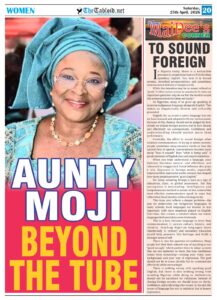
 In the history of electronic journalism in Nigeria, Chief Moji Makanjuola is a name which stands out as a distinct voice among her contemporaries–female and male–in the industry, birthed by the establishment of the ‘Iwe Irohin’ in 1859 by Reverend Henry Townsend in Abeokuta, now the Ogun State capital.
This feature is not an happenstance; Makanjuola worked for and commensurably earned it. She realised it early–first as an announcer in her Kwara State and later the Nigerian Television Authority (NTA)–that she needed to invest her energy into her career to become the journalist of her active audience dream; that’s, viewers who always loved to see her face on the screen.
Through sacrifice, love for the job and a particular incident which involved her mother and consequently exposed to her the dark, embarrasing side of the nation’s health sector, she embraced health beat and turned out an authority who could not be overlooked by stakeholders in the sector as a global health and gender reporter.
President Bola Tinubu recognised this modest profile while felicitating Makanjuola who clocked 70th year last Tuesday, April 21.
In his congratulatory message signed by his Special Adviser on Communication and Strategy, Mr Bayo Onanuga, the president described her as a pathfinder whose voice in journalism inspired generations of broadcasters and media practitioners across the country.
“I commend your mentorship and service beyond the newsroom, which have left indelible mark on the profession and the nation at large,” the president submitted.
President Tinubu’s wife, Senator Oluremi Tinubu also paid a tribute to the broadcaster who is admirably called ‘Aunty Moji’ in the newsroom and beyond, simply describing her as a passionate, consistent media personality, and a role model to her colleagues on her beat.
Outside the newsroom in the 90s, Makanjuola, the recipient of the prestigious Member of the Order of the Federal Republic (MFR) emerged and served as the impactful national President of the Nigeria Association of Women Journalists (NAWOJ). Her tenure recorded significant strides in boosting female journalists self esteem in the male-dominated profession and resolving state councils and chapters knotty issues without any side losing uts face.
Currently, the first Nigerian female international health correspondent is the executive director of the International Society of Media and Public Health, a body passionately engaging in public enlightenment and related functions.
***Published April 25, 2026

Leave a Reply